
Psyllium Husk: The Natural Guardian Against Obesity and Diabetes
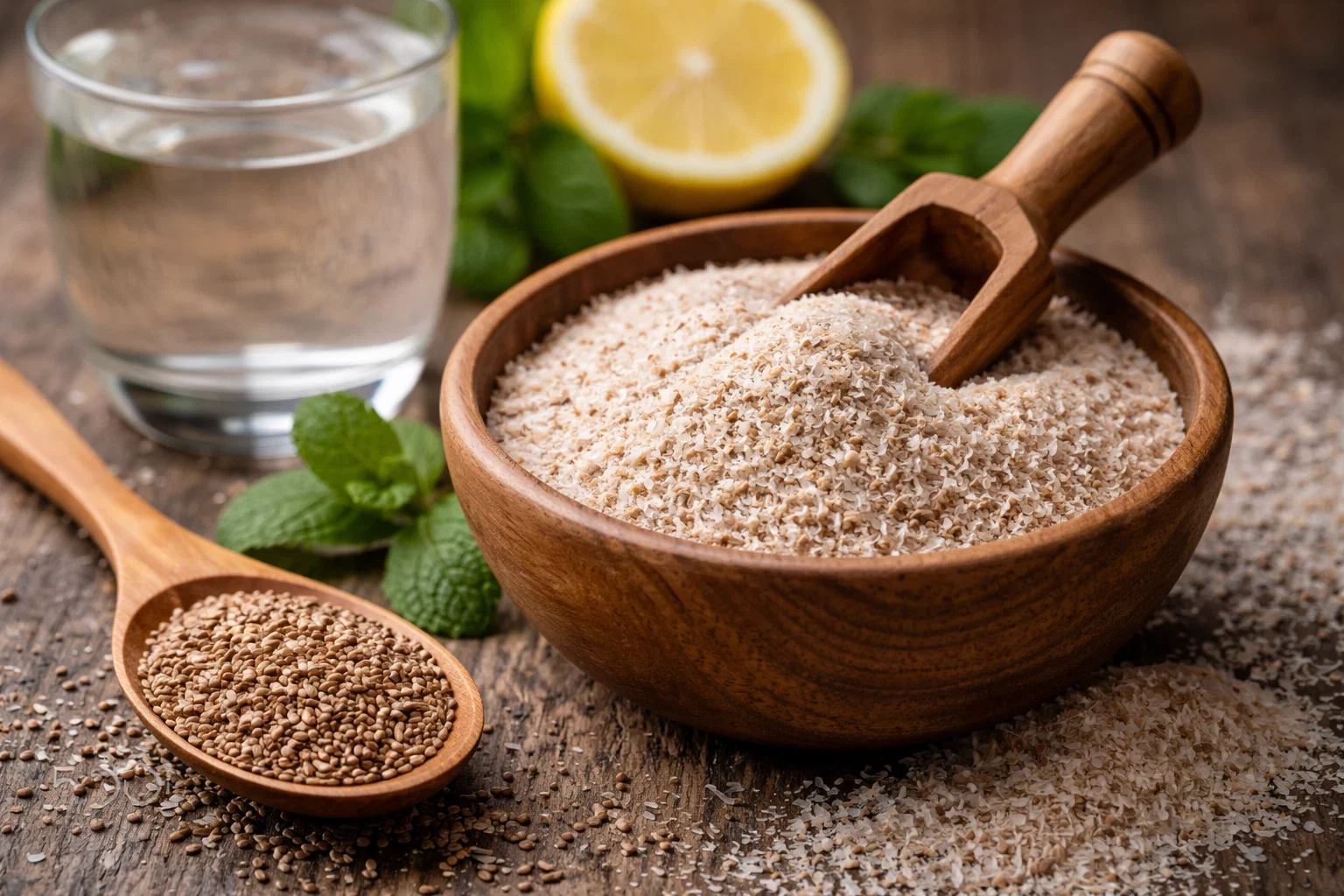
Psyllium Husk: The Soluble Fibre
Metabolic health has emerged as a fundamental topic in modern medicine, particularly as we face a growing incidence of lifestyle disorders such as obesity and type 2 diabetes. While pharmaceutical interventions are fast evolving, nature frequently supplies potent tools that function in collaboration with human biology. One such tool is the simple soluble fibre known as psyllium. It is more than just a digestive help; it is a metabolic regulator that has a significant impact on how our bodies use sugar and fat. This article will help you understand why fibre may be the missing link in your health routine.
To really learn why supplements like psyllium husk are useful, we must first consider the broader category to which they belong: dietary fibre. Fibre, sometimes known as “roughage,” is a complex family of carbohydrates that our bodies are unable to digest. Unlike proteins and lipids, which are broken down and absorbed, fibre passes through our system intact.. Fibre is categorized into two categories based on its interaction with water: soluble and insoluble. Each plays a specialized role in sustaining the metabolic mechanism.
Soluble Fibre: The Chemical Regulator
Soluble fibre is defined by its capacity to dissolve in water. When it enters the digestive tract’s watery environment, it transforms into a gel-like substance by absorbing fluids. This is more than just a physical transformation; it is a functional one. This viscous gel functions as a metabolic brake. Mixing with partially digested food in the small intestine slows nutrient absorption into the circulation.
This delaying process is the scientific explanation for soluble fiber’s ability to control blood sugar and cholesterol levels. By slowing glucose absorption, it inhibits the fast insulin spikes that cause type 2 diabetes. Simultaneously, this gel captures and transports bile acids, which are utilized to breakdown lipids. Because the liver requires cholesterol to produce more bile, it takes cholesterol from the blood, hence lowering LDL levels.
Furthermore, soluble fibre is very fermentable. When it reaches the colon, helpful gut bacteria degrade it, releasing short-chain fatty acids that nourish the gut lining and lower systemic inflammation.
Psyllium Husk: Source & Origins
Psyllium husk is obtained from the seeds of Plantago ovata, a shrub-like herb native to India and the Mediterranean. The term “husk” refers to the outer shell of the seed, which is extremely rich in soluble fibre. Plantago seed husk has a unique chemical structure that aggressively absorbs water, unlike other fibre foods that may just add bulk to your diet.
When this husk comes into contact with water, it transforms rather than simply being wet. The mucilage, a gelatinous material found in the seed coat, swells and forms a thick, viscous gel. This unusual capacity to transform from a dry powder to a thick gel is the core of its therapeutic efficacy. Its gel-forming nature distinguishes it from insoluble fibres such as wheat bran, allowing it to actively participate in the digesting process.
Psyllium Husk: Usage in Modern Health
Psyllium husk consumption has changed dramatically over the years. Historically, it was regarded only in traditional medicine systems such as Ayurveda for its capacity to control bowel movements and relieve constipation. While it remains the gold standard for intestinal regularity, contemporary science has broadened its use range. Today, it is used as a functional food element in heart-healthy diets, a supplement for cholesterol lowering, and a key adjunct therapy for metabolic syndrome including Type 2 Diabetes and Obesity.
People use it to feel fuller for longer, to prevent energy crashes after meals, and to help with cholesterol management. It’s more than simply a laxative; it’s a “viscosity agent” for your gut. By integrating it into baking, or simply drinking it with water, people are effectively improving the texture of their intestinal contents, slowing nutrient absorption, which is critical for controlling chronic metabolic problems.
Psyllium Husk in Weight Management
Satiety (fullness) and calorie density are essential concepts in psyllium husk research on obesity. When you swallow this fibre, it travels to your stomach and interacts with the fluids that are already there. Because it is highly hygroscopic (loves water), it can expand up to 10 times its original volume. This tremendous expansion triggers stretch receptors in the stomach wall. These receptors deliver immediate messages to the brain via the Vagus nerve, suggesting that the stomach is physically full, even if you haven’t eaten a lot of calories.
Furthermore, the gel forms a “viscous trap” within the small intestine. This dense matrix hinders the flow of food, resulting in delayed stomach emptying. When food exits your stomach more slowly, you have less of an inclination to eat again. This is not about starving the body; rather, it is about timing digestion so that hunger hormones such as ghrelin are repressed for longer durations. It essentially tricks the body into feeling it has eaten a much larger meal. This results in a natural reduction in overall calorie consumption without the psychological stress associated with dieting.
Psyllium Husk in Type 2 Diabetes Management
Psyllium husk science provides a novel reason for its efficacy in diabetes care, particularly blood glucose control. The primary problem of Type 2 diabetes is the fast rise in blood sugar that occurs after consuming carbohydrates. This is sometimes referred to as the postprandial (postmeal) glucose spike. When you consume refined carbohydrates without fibre, they are rapidly broken down into glucose and flood the bloodstream, causing the pancreas to produce huge levels of insulin.
The viscous gel generated by the psyllium husk serves as a physical barrier. It covers both food particles and the walls of the small intestine. This barrier makes it harder for digestive enzymes to reach and degrade carbs. As a result, glucose is released into the bloodstream at a gradual, consistent rate rather than in a violent flood. This reduces the demand on the pancreas.
Furthermore, current research studies suggest that the fermentation of fibre in the lower gut produces short-chain fatty acids, which may increase the production of GLP-1 (glucagon-like peptide-1), a hormone that enhances insulin secretion and improves insulin sensitivity.
Psyllium Husk: Clinical Evidence & Research
Clinical trials involving psyllium husk have consistently supported these pathways. For example, a meta-analysis published in the American Journal of Clinical Nutrition examined numerous trials and showed that supplementation with this specific fibre significantly improved glycaemic control in type 2 diabetic patients. Regular ingestion was found to lower fasting blood glucose and HbA1c levels, indicating better blood sugar control over time.
Another major study on obesity discovered that participants who took psyllium before meals lost considerably more weight than the control group, although eating a similar diet. The researchers attributed this to the “satiety cascade” triggered by the fibre.
Studies on cholesterol management have demonstrated that it binds to bile acids in the stomach. Because bile acids are derived from cholesterol, the body is bound to extract cholesterol from the blood to produce more bile, decreasing LDL (bad) cholesterol levels. These clinical data provide a strong scientific foundation for its use in treatment procedures.
Psyllium Husk Forms: Powder vs Capsules
New users frequently struggle with the many kinds of psyllium husk. There are two basic options: loose powder and gelatin (or veggie) capsules.
The powder is widely regarded as the optimum form for metabolic health. This is because the powder dissolves quickly in water and begins the gel-forming process before it reaches your stomach. It provides a wider surface area for water absorption while ensuring that the entire viscosity effect is obtained. Some people, however, are put off by the flavour and texture, which are frequently described as gritty or sawdust-like.
Capsules provide ease while totally masking the flavour. They are good for travellers or people who have a strong gag reflex. However, it takes a substantial number of capsules to equal one tablespoon of powder. Furthermore, there is a short delay since the capsule shell must disintegrate before the fibre is released.
The powder mixed with a large glass of water is scientifically the most effective delivery technique for achieving the maximal “volume effect” in the stomach to suppress appetite.
Psyllium Husk: Dosage & Guidelines
Psyllium husk dose should be approached with a “start low and go slow” mindset. The human stomach is an ecosystem that responds slowly to changes in fibre intake. A quick inflow of fibre might result in gas, bloating, and discomfort. Metabolic advantages typically require a daily intake of 10-20 grams.
For a beginner, start with 3 to 5 grammes (about one teaspoon) every day. This enables the gut bacteria to adapt to the new substrate. Over the course of two to three weeks, you can progressively increase to 5 grammes taken twice or three times each day. It is vital to dilute this dose with at least 250ml (8 ounces) of water. Without enough water, the hydrophilic nature of the fibre might work against you, perhaps resulting in constipation or blockages. The slogan for dose is hydration, hydration, and hydration.
Psyllium Husk Best Time to Consume
The optimal time to ingest psyllium husk is primarily determined by your personal health goals. If the primary goal is weight loss and appetite suppression, the scientific consensus recommends taking it 15 to 30 minutes before a meal. This time permits the fibre to enter the stomach, absorb water, and expand. By the time you sit down to eat, the stretch receptors have already signalled a state of fullness, which naturally discourages overeating.
The most efficient way to manage blood sugar is to take it right before or during a meal. This ensures that the gel matrix forms precisely when the carbs reach the system, allowing it to interact with the food and halt digestion.
If you are taking it only for regularity or cholesterol management, the timing is less important, but consistency is essential. Many people like to develop a routine in the morning, but it is also beneficial at other times as long as it is not taken too close to other prescriptions.
Psyllium Husk: Side Effects & Precautions
Psyllium husk side effects are mostly mild and temporary, but they do exist. The most common complaint is gastrointestinal distress, which includes bloating, flatulence, and abdominal cramps. This occurs because bacteria in your colon ferment some of the fibre, producing gas as a byproduct. These symptoms usually go away after the body adapts, which takes about a week or two.
A more serious, albeit uncommon, risk is esophageal or intestinal blockage. If the powder is ingested dry or with insufficient water, it may swell in the throat or oesophagus, causing choking. This is why it always needs to be well mixed with liquid.
Furthermore, because it slows absorption, it can impair the uptake of many oral medications, including lithium, carbamazepine, and even diabetes treatments. It is normal medical recommendation to separate the consumption of fibre supplements and other medications by at least two hours to avoid this interaction.
Psyllium Husk: Long-Term Usage & Sustainability
Long-term use of psyllium husk is largely regarded as safe and beneficial to the vast majority of people. Unlike stimulant laxatives, which can lead to reliance and the loss of normal muscular tone in the gut, psyllium is a volume-forming agent. It operates mechanically rather than chemically, so your body will not develop a tolerance to it. You don’t have to keep raising the dose to achieve the same result.
Long-term studies have shown that consistent ingestion can result in long-term benefits in cholesterol profiles and glycaemic management. It essentially matches our ancestors’ high-fiber meals, which our modern physiology continues to expect.
However, it should be seen as a supplement to a healthy diet, rather than a replacement for complete foods. A diet high in vegetables, fruits, and whole grains delivers a variety of nutrients that supplements cannot match. As a strategic tool for addressing the obesity and diabetes, it is safe, effective, and sustainable for long-term usage.
References & Further Reading
Abutair, A. S., Naser, I. A., & Hamed, A. T. (2016). Soluble fibers from psyllium improve glycemic response and body weight among diabetes type 2 patients (randomized control trial). Nutrition Journal, 15(1), 86.
Anderson, J. W., et al. (2000). Long-term cholesterol-lowering effects of psyllium as an adjunct to diet therapy in the treatment of hypercholesterolemia. The American Journal of Clinical Nutrition, 71(6), 1433–1438.
Brum, J. M., Gibb, R. D., Peters, J. C., & Mattes, R. D. (2016). Satiety effects of psyllium in healthy volunteers. Appetite, 105, 27–36.
Gibb, R. D., McRorie, J. W., Russell, D. A., Hasselblad, V., & D’Alessio, D. A. (2015). Psyllium fiber improves glycemic control proportional to loss of glycemic control: a meta-analysis of data in euglycemic subjects, patients at risk of type 2 diabetes, and patients being treated for type 2 diabetes. The American Journal of Clinical Nutrition, 102(6), 1604–1614.
Jovanovski, E., et al. (2018). Effect of psyllium (Plantago ovata) fiber on LDL cholesterol and alternative lipid targets, non-HDL cholesterol and apolipoprotein B: a systematic review and meta-analysis of randomized controlled trials. The American Journal of Clinical Nutrition, 108(5), 922–932.
McRorie, J. W. (2015). Evidence-based approach to fiber supplements and clinically meaningful health benefits, Part 1: What to look for and how to recommend an effective fiber therapy. Nutrition Today, 50(2), 82–89.
Pal, S., & Radavelli-Bagatini, S. (2012). Effects of psyllium on metabolic syndrome risk factors. Obesity Reviews, 13(11), 1034–1047.
Wei, Z. H., Wang, H., Chen, X. Y., et al. (2009). Time-dependent effects of psyllium on gastrointestinal function and lipids in patients with type 2 diabetes. Biomedical and Environmental Sciences, 22(4), 283–291.
Xiao, Z., et al. (2020). High-viscosity psyllium fiber improves glycemic control and insulin sensitivity in patients with type 2 diabetes: A randomized, double-blind, placebo-controlled clinical trial. Journal of Clinical Endocrinology & Metabolism.