
Semaglutide vs Tirzepatide: The Ultimate Guide to the New Weight Loss Science
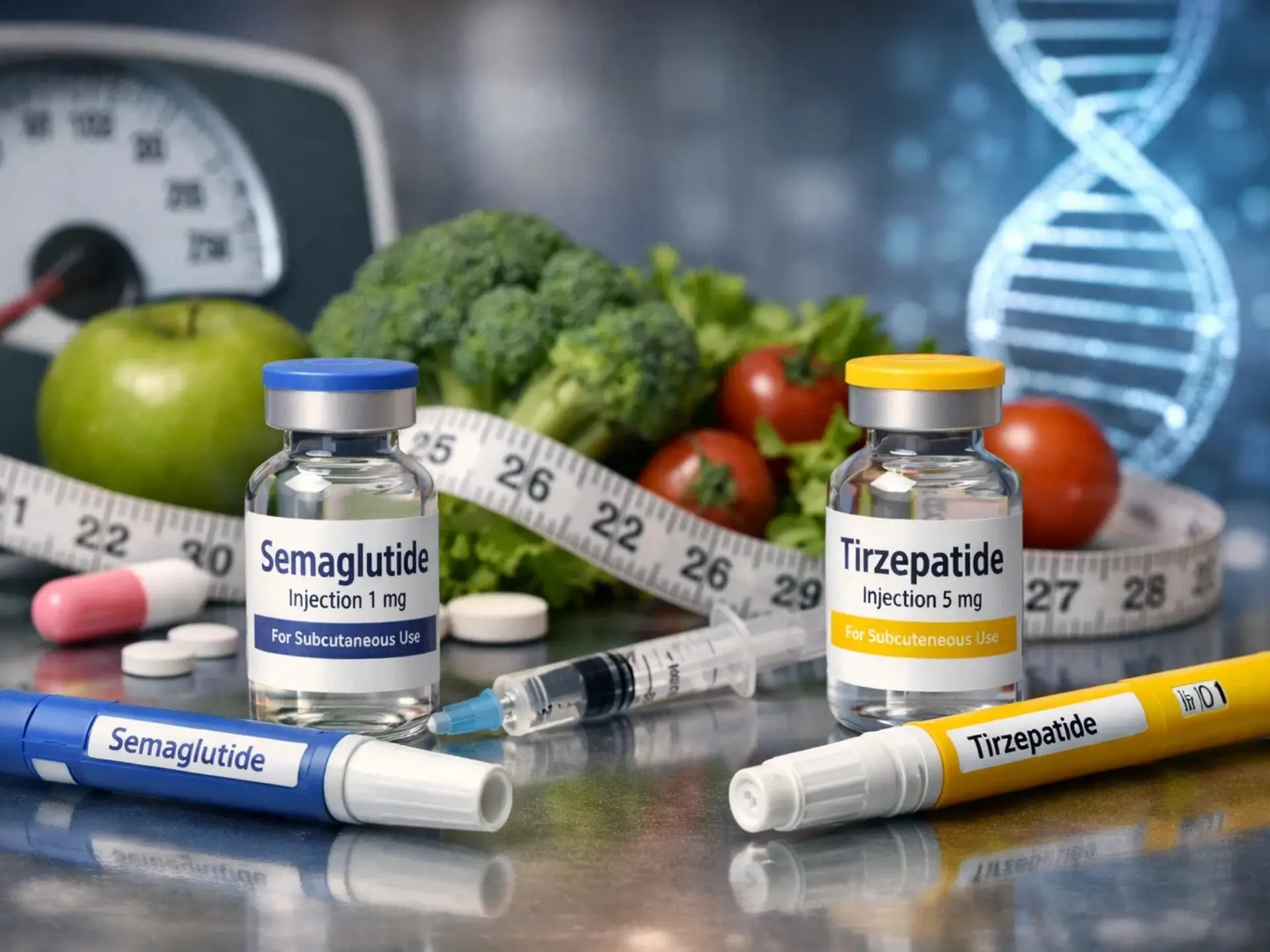
Semaglutide & Tirzepatide: A Detailed Comparison
Semaglutide and Tirzepatide have rapidly become the most talked-about topics in modern healthcare. You are likely here because you want to cut through the noise and understand the actual science behind these metabolic powerhouses. Semaglutide, known widely by brand names like Ozempic, started this revolution, but Tirzepatide, the active ingredient in Mounjaro, has arguably accelerated it.
This article is your comprehensive guide to understanding Semaglutide vs. Tirzepatide. We will decode exactly how they function in the human body, compare their clinical trial results, and explore what these advancements mean for the future of obesity and diabetes management.
Semaglutide & Tirzepatide: Decoding The Brand Names
Ozempic, Wegovy, and Rybelsus contain a chemical known as semaglutide. It was the first major breakthrough in this particular class of medicines, which had previously been licensed for Type 2 diabetes before its potent weight loss advantages were discovered.
Tirzepatide is the next generation of this science and the active ingredient in Mounjaro and Zepbound.
While both treatments are injectable and given once a week, they are chemically separate. Semaglutide is a peptide that mimics one hormone, whereas Tirzepatide is a more complicated compound that mimics two. Understanding this underlying difference is critical to understanding why they influence the body in slightly different ways.
Semaglutide vs Tirzepatide = Single Agonist vs. Dual Agonist
Semaglutide works as a GLP-1 receptor agonist (activator), which means it mimics the activity of glucagon-like peptide-1, a hormone that your gut generates naturally after eating. It alerts your body to the fact that you have been fed by connecting to GLP-1 receptors.
Tirzepatide advances this mechanism by functioning as a dual agonist (activaor). Tirzepatide activates both the GLP-1 and GIP receptors. Tirzepatide is often referred to as a “twincretin” due to its dual effect. This increase in GIP activity is thought to synergise with GLP-1, potentially increasing the metabolic advantages beyond what Semaglutide can achieve alone.
How Do Semaglutide & Tirzepatide Control Hunger?
Semaglutide targets the hypothalamus, the part of the brain that regulates hunger and desires. It significantly reduces the “food noise”, the persistent mental obsession with eating, that many obese people feel.
Tirzepatide functions on the same brain circuits, but it may have a stronger effect due to its dual hormonal effects. Both drugs serve to reset the body’s set point for body weight by modifying the molecular signals of hunger.
Patients on Semaglutide or Tirzepatide frequently report experiencing satiety, or fullness, much earlier in a meal than before, resulting in a calorie deficit without the stress of strict dieting.
Semaglutide and Trizepatide: The Gastric Emptying Effects
Semaglutide works by delaying the rate at which your stomach dumps food into your small intestine. This delayed gastric emptying implies that food remains in the stomach for a longer period of time, resulting in a longer sensation of fullness.
Tirzepatide uses a similar function, acting as a digestive brake. This physical action is critical because it inhibits the quick increase in hunger that usually occurs a few hours after eating. However, this delay in digestion is the primary cause of gastrointestinal side effects, as the stomach remains fuller for longer periods of time than the body is used to.
Semaglutide & Tirzepatide: Effect on Blood Sugar Management
Semaglutide is excellent in controlling blood glucose levels by stimulating the pancreas to release insulin when sugar levels are high. It also inhibits the production of glucagon, a hormone that raises blood sugar, but only in a glucose-dependent manner to prevent dangerous lows.
Tirzepatide provides even more effective glycaemic management because the GIP hormone stimulates insulin secretion in a slightly different way than GLP-1. Clinical studies comparing Semaglutide vs. Tirzepatide in diabetes patients frequently demonstrate that Tirzepatide produces slightly greater reductions in Haemoglobin A1C.
Both medications provide a preventive mechanism for patients with Type 2 diabetes against long-term vascular damage caused by uncontrolled high blood sugar levels.
Semaglutide & Trizepatide: Role in Weight Management
Semaglutide established a new standard for nonsurgical weight loss in the well-known STEP clinical trials. Participants without diabetes who received the normal 2.4 mg dose of Semaglutide lost an average of 15% of their body weight over 68 weeks. This was a groundbreaking discovery because earlier anti-obesity drugs seldom produced double-digit percentage losses. For a patient weighing 200 pounds, a 15% reduction equals a 30-pound weight loss. Semaglutide demonstrated that addressing biological pathways could provide outcomes for persons suffering from persistent obesity that diet and exercise alone typically do not.
Tirzepatide produced even more dramatic results in the SURMOUNT clinical trials, stretching the limits of what medication can do. Over 72 weeks, individuals taking the highest 15 mg dose of Tirzepatide lost an average of 21% to 22.5% of their body weight. This makes Tirzepatide the more potent alternative in terms of raw numbers. Using the same 200-pound example, a patient taking Tirzepatide may potentially lose 40 to 45 pounds. Experts believe Tirzepatide’s GIP component helps the body burn fat more efficiently, contributing to its better efficacy than Semaglutide.
Side Effects of Semaglutide vs Tirzepatide
Semaglutide’s negative effects are well-documented and largely affect the gastrointestinal system, including nausea, vomiting, diarrhoea, and constipation. These problems are typically most severe when starting the medicine or increasing the dosage.
Tirzepatide has a fairly similar side effect profile, which shocked several researchers due to its higher potency. Some evidence suggests that the GIP activation in Tirzepatide may alleviate some of the nausea associated with GLP-1 medication.
However, tolerance is highly variable among individual. Some patients may tolerate Semaglutide better, while others report that Tirzepatide causes fewer problems. Staying hydrated and eating smaller meals are important techniques for managing the effects of either medicine.
Semaglutide & Tirzepatide: The Muscle Mass Issue
Semaglutide induces rapid weight loss, which unavoidably results in the loss of some lean muscle tissue in addition to fat. Tirzepatide, due to the rate and volume of weight loss it causes, poses the same body composition challenge. Maintaining muscle mass is essential for metabolic health and physical function, especially in older persons.
Physicians who prescribe Semaglutide or Tirzepatide increasingly emphasize the value of a high-protein diet and continuous resistance training. The goal is to lose weight mostly from adipose tissue (fat), rather than muscle, which is essential to maintain the body robust and metabolism active.
Cardiovascular Benefits of Semaglutide vs Trizepatide
Semaglutide currently has the advantage in terms of established heart health advantages. The SELECT clinical trial demonstrated conclusively that Semaglutide lowers the risk of severe adverse cardiovascular events such as heart attack and stroke in overweight persons with existing cardiovascular disease. The FDA has officially approved this specific advantage.
Tirzepatide is currently being tested in comparable long-term cardiovascular outcome trials. While preliminary results indicate that Tirzepatide dramatically improves blood pressure and lipid profiles, we must wait for complete data to determine whether it equals Semaglutide’s capacity to prevent heart attacks and strokes.
Semaglutide & Tirzepatide's Impact on Liver Health
Semaglutide has showed potential in lowering liver fat, which is advantageous for people with Non-Alcoholic Fatty Liver Disease (NAFLD). Weight loss alone causes considerable improvements in liver enzymes and inflammation.
Tirzepatide is gaining a lot of interest in this field since it targets GIP receptors on liver cells. Early study suggests that Tirzepatide may be much more effective at clearing liver fat and lowering fibrosis markers.
Hepatologists are closely monitoring ongoing trials to see if Tirzepatide will become the primary treatment for fatty liver disease, potentially surpassing Semaglutide in this therapeutic area.
Who Can Take Semaglutide or Tirzepatide
Semaglutide and Tirzepatide are prescription drugs used to treat specific medical disorders, not for general weight loss. According to FDA standards, patients qualify if their Body Mass Index (BMI) is 30 or higher (obesity) or 27 or higher (overweight) and they have at least one weight-related disease, such as hypertension or high cholesterol.
Doctors should also look for contraindications, such as a personal or family history of medullary thyroid cancer or Multiple Endocrine Neoplasia syndrome type 2. These stringent requirements ensure that the benefits of taking powerful medications such as Semaglutide or Tirzepatide outweigh the hazards.
Price and Availability of Semaglutide vsTirzepatide
Semaglutide and Tirzepatide are extremely expensive drugs, often costing more than $1,000 per month for cash-paying patients. Insurance coverage varies greatly and frequently depends on whether the patient is diagnosed with Type 2 diabetes or obesity alone. Tirzepatide, being newer, may have different coverage tiers than Semaglutide. The immense popularity of these pharmaceuticals has also resulted in global supply shortages, making accessibility a significant challenge. Patients frequently have to phone various pharmacies to determine their dosage, and the expensive cost remains a substantial barrier for many who could benefit from them.
Discontinuing Semaglutide or Tirzepatide
Semaglutide and Tirzepatide are long-term treatments for obesity rather than cures. Clinical research have indicated that when people discontinue these drugs, their weight tends to rebound. The biological drivers of appetite that were repressed by the medicines resurface, frequently leading to weight gain. This shows that Semaglutide and Tirzepatide may require long-term use to maintain weight loss and metabolic benefits. Discontinuing the medicine necessitates a thoughtful plan with a healthcare professional, but current research supports the notion that continual therapy is required for long-term results.
The Future Beyond Semaglutide &Tirzepatide
Semaglutide and Tirzepatide have set the stage for a wave of innovation in metabolic therapy. Researchers are currently developing “triple agonist” medicines, such as Retatrutide, that target GLP-1, GIP, and glucagon receptors together for increased efficacy. We are also seeing the development of oral formulations, which may someday replace injections. While Semaglutide and Tirzepatide are the current market leaders, the industry is evolving towards more personalised and potent choices. These developments demonstrate that we have reached a new era in which obesity is treated with the same scientific rigour as any other chronic medical illness.
Semaglutide vs Tirzepatide
Feature | Semaglutide (Wegovy/Ozempic) | Tirzepatide (Zepbound/Mounjaro) |
Drug Class | Single Agonist (GLP-1 only) | Dual Agonist (GLP-1 + GIP) |
Primary Mechanism | Mimics GLP-1 hormone to curb hunger | Mimics GLP-1 and GIP for dual effect |
Average Weight Loss | Approx. 15% (STEP trials) | Approx. 21-22.5% (SURMOUNT trials) |
Diabetes Control (A1C) | High efficacy (lowers A1C ~1.5-2%) | Superior efficacy (lowers A1C ~2-2.5%) |
Cardiovascular Benefit | Proven reduction in heart attack/stroke | Studies ongoing (promising early data) |
Common Side Effects | Nausea, diarrhea, constipation, vomiting | Similar GI issues; potentially fewer systemic effects |
Administration | Weekly subcutaneous injection | Weekly subcutaneous injection |
FDA Status | Approved for Diabetes & Weight Loss | Approved for Diabetes & Weight Loss |
Cost | High (~$900-$1,300/month) | High (~$1,000-$1,300/month) |
Further Reading & References
Frías, J. P., et al. (2021). Tirzepatide versus Semaglutide Once Weekly in Patients with Type 2 Diabetes. The New England Journal of Medicine, 385(6), 503–515.
Wilding, J. P. H., et al. (2021). Once-Weekly Semaglutide in Adults with Overweight or Obesity (STEP 1). The New England Journal of Medicine, 384(11), 989–1002.
Jastreboff, A. M., et al. (2022). Tirzepatide Once Weekly for the Treatment of Obesity (SURMOUNT-1). The New England Journal of Medicine, 387(3), 205–216.
Garvey, W. T., et al. (2023). Tirzepatide once weekly for the treatment of obesity in people with type 2 diabetes (SURMOUNT-2): a double-blind, randomised, multicentre, placebo-controlled, phase 3 trial. The Lancet, 402(10402), 613-626.
Lincoff, A. M., et al. (2023). Semaglutide and Cardiovascular Outcomes in Obesity without Diabetes. The New England Journal of Medicine, 389(24), 2221-2232.
Karagiannis, T., et al. (2022). Efficacy and safety of tirzepatide in type 2 diabetes: a systematic review and network meta-analysis. The Lancet Diabetes & Endocrinology, 10(8), 567-569.
Singh, G., et al. (2022). Wegovy (semaglutide): a new weight loss drug for chronic weight management. Journal of Investigative Medicine, 70(1), 5-13.
Nauck, M. A., & D’Alessio, D. A. (2022). Tirzepatide, a dual GIP/GLP-1 receptor co-agonist for the treatment of type 2 diabetes with unmatched effectiveness regarding glycaemic control and body weight reduction. Molecular Metabolism, 66, 101631.
Wharton, S., et al. (2023). Daily Oral GLP-1 Receptor Agonist Orforglipron for Adults with Obesity. The New England Journal of Medicine, 389(10), 877-888.
Rubino, D., et al. (2021). Effect of Continued Weekly Subcutaneous Semaglutide vs Placebo on Weight Loss Maintenance in Adults With Overweight or Obesity: The STEP 4 Randomized Clinical Trial. JAMA, 325(14), 1414–1425.